22.03.2015 FEATURE ARTICLE
Standardization Of Herbal Medicines Possible?
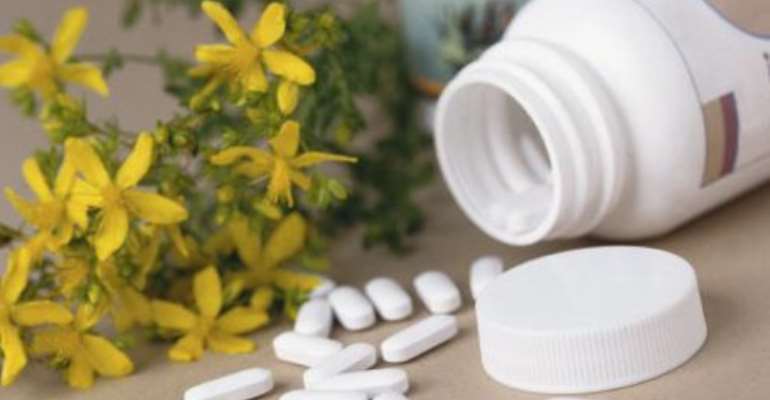
Standardization of drugs simply means confirmation of its identity and determination of its quality and purity. In orthodox medicine, every step taken to come out with a drug or medicine is a standardization process. For instance Artemether Lumefantrine (ACT) an anti malaria drug derived from the plant Artemisia annua is a standardized drug as its identity, quality, purity and consistency is highly assured. The active principles of this drug i.e Artemether and Lumefantrine after isolation from the plant are purified in the lab under standard conditions and its activity against the Plasmodium falciparum that causes malaria well demonstrated using animal models. Here healthy animals like rats are infected with the malaria parasite and doses of the purified compound tried on them to cure the malaria taking note the particular dose of the drug that treats these rats, the mechanism of drug action, side effects the isolated compound or drug has etc.
Clinical trials on humans then follows again taking note of the drug dose that completely reverses the effects of the Plasmodium parasite in different age groups of humans, and the adverse or side effects in the case of an antimalarial drug . If the trial is successful just in the case of Artemether Lumefantrine (ACT), the standards of preparation is then documented in standard pharmaceutical reference books like the British Pharmacopoeia(BP), United states pharmacopoeia, etc. Most orthodox medicines formulated in Ghana or imported have been produced with directives from the British pharmacopoeia(BP). The amount of active constituents required for producing different forms of medicines like tablets, syrups, capsules together with the excipients are well laid out in these pharmacopoeia thus physicians are assured of consistent high quality, efficacy and responses from the same dose of an orthodox medicine overtime. This suggests that irrespective the country an orthodox medicine is produced consistency is assured as there is same responses from the same dose.
Herbal medicines contain active ingredient plant parts or plant materials in the crude or processed state with certain excipients (inactive component of medicinal products) according to the World Health Organisation (WHO). The quality of herbal medicines is affected by certain factors thus same responses may not be gotten from same doses of a herbal medication when used. This implies that there is always a difference in quality of herbal medicines produced from different places within a community, state or country. The complex nature of herbs(they contain hundreds of compounds in their impure state), geographic location, seasonal changes(rainfall, drought,etc)unknown active principles and method of harvesting, drying, storage and transportation are some of the factors that are responsible for the change in consistencies of herbal medicines.
However Physicians who wish to use herbal medicines want to be assured of consistent high quality, efficacious products, and comparable responses from the same dose of an herbal product. Does it mean herbal medicines can therefore not be standardized? The W.H.O has set specific guidelines for the assessment of safety, efficacy and quality of herbal medicines. Standardization of herbal medicines is not an easy task as numerous factors affect the efficacy and reproducibility of their therapeutic effects. The standardization of crude drugs is done by authentication: stage of collection, parts of the plant collected, identity like phytomorphology, microscopical and histological analysis, leaf constant(stomatal index, vein islet number etc). other histological tests include: foreign matter determination, organoleptic evaluation, ash value, heavy metal determination, chromatographic and spectroscopic evaluation, etc.
In general, the herbal formulation can be standardized systematic to formulate the medicament using raw materials collected from different localities taking note of the efficacy of the different batches of formulation. The preparation with better clinical efficacy after animal studies with the medicine is then selected. Again here pain is induced in rats by injection of chemicals that cause inflammation in the case where the efficacy of an herbal medicine indicated for treatment of abdominal pain is being confirmed. Different doses of the herbal extract or product is administered to the animals whiles monitoring the side effects, mechanism of action, etc this is called pharmacological studies . All routine physical, chemical and pharmacological parameters are checked for all batches in other to select and validate the whole manufacturing process.
The available herbal pharmacopoeia are location specific because of the said factors that affect the quality of herbal medicine. Thus herbal pharmacopeias like British herbal pharmacopoeia(BHP), Chinese herbal pharmacopoeia, Ghana Herbal Pharmacopoeia(GHP) Ayurvedic pharmacopeia of India, Japanese Standard for herbal medicine. These pharmacopoeias lay down monograph for herbs and herbal product to maintain their quality in their respective countries unlike with British or United states pharmacopoeia which is used in orthodox medicines worldwide.
In conclusion, Standardization is the code of conduct inorder to ensure the consistent efficacy that manufacturers should use to ensure batch-to-batch consistency of their product. The quality of herbal medicines is the sum of all factors which contribute directly and indirectly to the safety, effectiveness, and acceptability of the product. The advancement in the study of crude drugs has employed methods such as botanical, spectroscopic and biological methods for estimating the active constituents present in a crude drug.
BENTIL EMMANUEL ASARE
STUDENT, HERBAL MEDICINE DEPARTMENT,
FACULTY OF PHARMACY AND PHARMACEUTICAL SCIENCES, KNUST
bentilemmanuelasare@yahoo.com

Comments
Post a Comment